
Articles · Case study
Church of England Marks First Festival of Creation in Christ
A new liturgical festival shows how religious institutions can turn environmental concern into recurring communal practice.
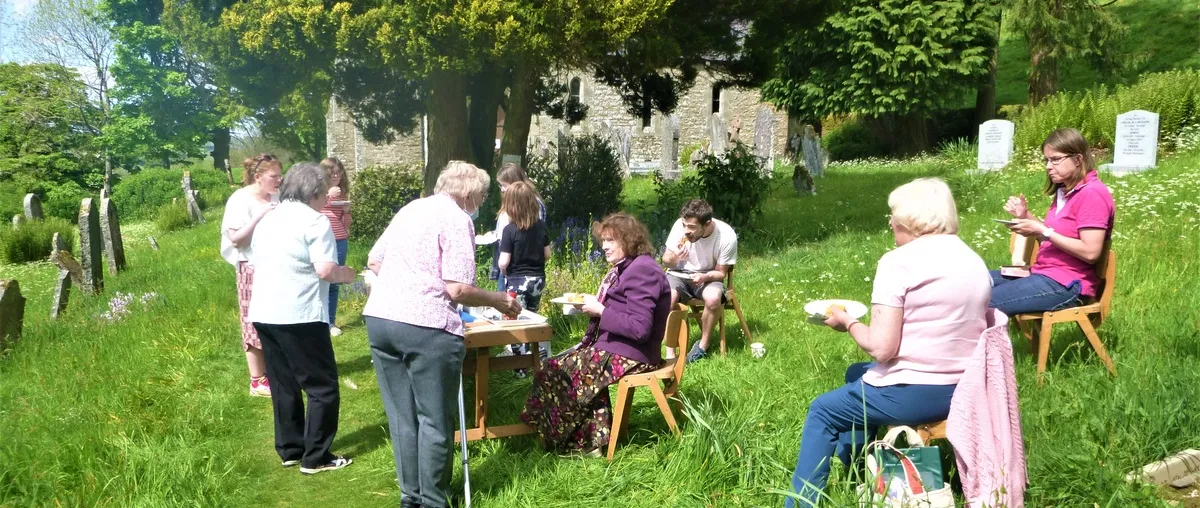
Churchyard habitat imagery used by the Church of England in announcing the Festival of Creation in Christ. · Image: Church of England
In September 2026, the Church of England joined other Christian communities in marking the first Festival of Creation in Christ after the observance was added to its Common Worship calendar. The Church described the festival as a chance to give thanks for creation, reflect on human responsibility toward the natural world and pray for renewal.
Calendars shape what communities remember
A recurring religious festival does more than publish a statement of concern. By placing creation within the worship calendar, the Church of England gives environmental responsibility a repeated place in congregational life, allowing the subject to return even when media attention moves elsewhere.
This is one of the ways institutions influence behaviour through structure rather than argument alone. Annual observances can reinforce memory, teaching and identity by ensuring that a theme is encountered regularly by people who may not otherwise seek it out.
The festival links theology with environmental responsibility
The Church’s announcement frames the natural world as a gift of God and connects care for creation with Christian discipleship. That theological claim will not persuade everyone, but it can motivate believers who understand environmental responsibility through duties to a creator rather than through secular ethics alone.
TBR separates those two levels. The truth of a theological explanation is one question, while the practical consequences of encouraging conservation, restraint and stewardship are another; beneficial environmental behaviour does not by itself prove the religious worldview that motivates it.
Religious motivation can add social reach
Faith communities have buildings, local networks, rituals and trusted leaders that can translate broad ethical principles into repeated local action. The Church of England’s national reach means a liturgical emphasis can potentially influence conversations about energy, land, food, consumption and biodiversity in thousands of congregations.
At the same time, institutional statements should be judged by implementation. If creation care remains symbolic while property, investment and operational decisions move in the opposite direction, the gap between ritual language and institutional conduct becomes ethically relevant.
Shared worship can make environmental ethics communal
Environmental problems often involve collective-action difficulties because individual restraint can feel insignificant when others continue as before. A communal festival can address that psychological barrier by treating responsibility as a shared norm rather than an isolated personal sacrifice.
Religious communities also provide opportunities for practical projects such as biodiversity work, energy changes and local education. The strongest case for the festival will therefore come from what congregations do between annual observances, not only from the language used during worship.
The event is a useful example of religion adapting to new priorities
Religious traditions often present themselves as continuous, yet their calendars and emphases change as communities respond to new knowledge and moral concerns. Adding a creation festival illustrates how institutions reinterpret inherited theology in response to contemporary environmental pressures.
That process deserves neither automatic praise nor suspicion. The relevant questions are whether the adaptation is intellectually coherent within the tradition, whether it produces worthwhile consequences, and whether the institution is willing to examine evidence about the environmental problems it seeks to address.
Evidence notes
The factual source is the Church of England’s 4 September 2026 announcement of the first Festival of Creation in Christ. TBR’s evidence framework is relevant when distinguishing theological motivation from empirical claims about environmental harm and effective responses.
Ethical questions
Should religious institutions use worship to encourage particular forms of environmental behaviour? How should they respond if ecological commitments conflict with financial, property or congregational interests?
Conclusion
The new festival shows how a religious calendar can be used to make an ethical concern durable. Its significance will depend on whether recurring worship is matched by informed, measurable and consistent environmental practice.
Sources used
- Evidence — Academic / peer reviewed
- First Festival of Creation in Christ — Church of England — Primary source
- Scientific Method — Academic / peer reviewed