
Articles · Investigation
Do Community Notes Actually Stop Misinformation?
A large 2026 study finds crowd-sourced fact-checks can reduce sharing after they appear, while exposing the cost of arriving after a post has already gone viral.
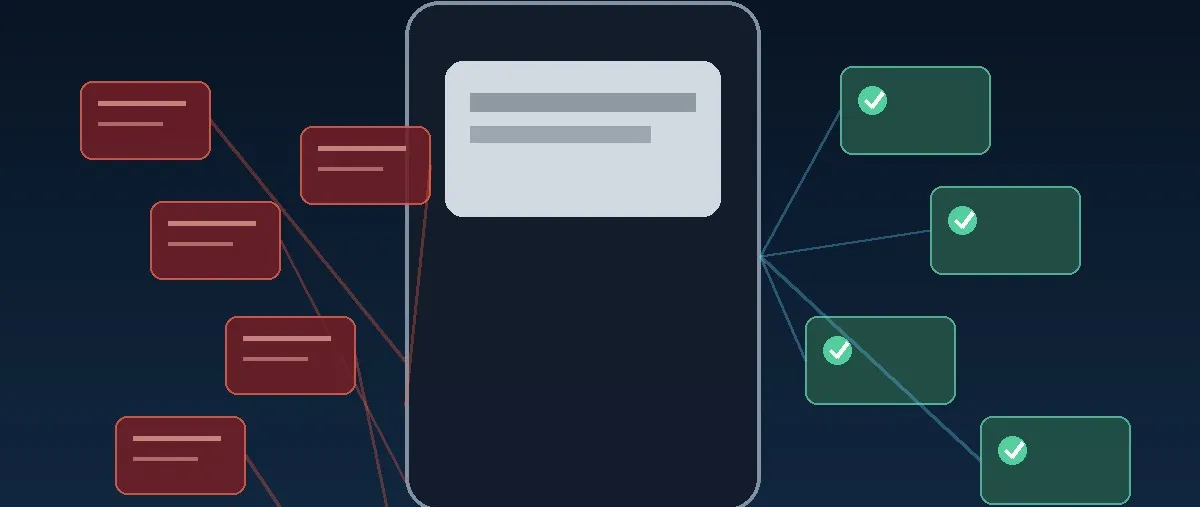
Community fact-checking can reduce sharing after a note appears, but timing determines how much misinformation has already spread. · Image: Truth By Reason — original generated editorial illustration
Community Notes are often praised as a scalable alternative to centralised fact-checking. New large-scale evidence from X suggests they can substantially reduce the spread of misleading posts once displayed, but timing limits their overall effect.
A rare large-scale test of what happens after a note appears
A 2026 Nature Communications study analysed 237,180 community-fact-checked cascades on X that had collectively been reposted more than 431 million times. Using repost time series and a difference-in-differences design, the researchers compared what happened before and after Community Notes became visible.
The headline result is substantial: displaying a Community Note was associated with a 61.2% reduction in subsequent reposting relative to the matched comparison. Posts with displayed notes were also more likely to be deleted by their authors.
The important qualification: corrections often arrive late
The same study found a much smaller system-wide effect on total engagement. Community Notes reduced total engagement with misleading posts by about 14.9%, because many notes appeared only after the fastest part of a post’s spread had already occurred.
This distinction matters. A correction can be highly effective for people who see it while still having a limited effect on the total audience if the false or misleading claim reached most of that audience first.
Why timing matters in viral systems
The researchers found that misleading posts could accumulate much of their sharing within hours, while helpful notes often took far longer to become publicly visible. That creates an asymmetry: creating context requires contributors to notice a problem, write a note and obtain ratings from people with different perspectives, while reposting requires only a tap.
Any misinformation system that relies on later correction therefore competes against the speed advantage of the original claim. This is not a unique weakness of Community Notes; professional fact-checkers face the same basic problem, often with even longer research and publication cycles.
What Community Notes are designed to do
X describes Community Notes as a collaborative system in which contributors add context to potentially misleading posts. A note becomes publicly visible when enough contributors, including people who have disagreed in past ratings, judge it helpful. X also publishes the scoring code and data, allowing outsiders to study how the system works.
That design tries to solve a trust problem. Rather than asking users to accept a platform employee or a single fact-checking organisation as the final authority, the system seeks agreement across contributors with different perspectives.
Crowd agreement is useful but not infallible
A diverse crowd can correct individual errors, but consensus is not the same as truth. Contributors may lack expertise, reliable sources may be unavailable, highly technical claims may be difficult to summarise, and a correct note can fail to reach the threshold for display.
The strength of the system therefore comes from process rather than from any assumption that crowds are automatically right. Transparent sourcing, open scoring rules and the ability to inspect the evidence all matter more than the mere number of raters.
Political and influential accounts are harder cases
The Nature Communications study found that the reduction in sharing was weaker for political content and posts from influential accounts. That is important because misinformation with the greatest public consequences often appears in exactly those environments.
People do not evaluate information in a social vacuum. Group identity, political loyalty, trust in the author and prior beliefs can influence whether a correction is accepted. Confirmation bias and motivated reasoning can therefore make even a technically accurate note harder to accept when correction carries a social or ideological cost.
Fact-checking changes behaviour without erasing the original claim
The observed reduction after notes appear suggests that context can change user behaviour. This is evidence against the cynical view that corrections never matter. Yet a reduced repost rate does not mean everyone changes their beliefs, and the study measures behaviour on the platform rather than long-term belief revision.
Someone may decide not to repost because a note creates doubt, because the post now looks reputationally risky, or because the note genuinely changes their understanding. Those mechanisms have different implications, and the study cannot reduce them to a single psychological explanation.
The design problem is now speed plus quality
If Community Notes work once visible, the obvious next challenge is getting reliable notes displayed earlier without sacrificing quality. Lowering thresholds too far could make the system faster but easier to manipulate. Keeping a very cautious threshold may preserve trust while conceding the most viral hours to misinformation.
This is a familiar trade-off in evidence systems: speed, reliability and scale cannot always be maximised simultaneously. The right design should therefore be judged by measurable outcomes rather than by whether crowd-sourced fact-checking sounds ideologically attractive.
What this evidence does and does not establish
The study provides strong real-world evidence that displayed Community Notes reduce subsequent sharing of posts identified as misleading. Its large sample and quasi-experimental design are important strengths. It does not prove that every individual note is correct, that the mechanism works equally well on every platform, or that users permanently revise false beliefs.
Nor does it show that community fact-checking can replace professional journalism, subject experts or platform enforcement in every case. Some claims require specialist investigation, protected sources or access to evidence that a volunteer crowd will not possess.
The larger lesson for misinformation
Misinformation is partly an accuracy problem and partly a distribution problem. A platform can improve the quality of corrections while still losing the race if misleading content travels much faster than verification. The 61.2% post-note reduction shows that interventions can work; the 14.9% total-engagement reduction shows why interventions must also arrive earlier.
A reasonable conclusion is that Community Notes are neither a failed gimmick nor a complete solution. They are a measurable intervention whose effectiveness depends heavily on speed, source quality, contributor diversity and the willingness of users to respond to context.
Evidence notes
The central evidence is a large quasi-experimental Nature Communications study of 237,180 fact-checked cascades. It estimates a 61.2% reduction in subsequent reposting after notes become visible and a 14.9% reduction in total engagement, largely because notes often appear after the most viral phase.
The results concern behaviour on X and should not be treated as proof that users permanently change their beliefs or that every displayed note is factually correct.
Ethical questions
- Should platforms prioritise faster corrections if doing so increases the risk of erroneous notes?
- Who should decide when a disputed claim receives a warning or contextual label?
- Do influential accounts have a greater responsibility to correct misleading posts?
- Should platforms reduce distribution while a high-impact claim is being verified?
Conclusion
Community Notes appear to work in an important but limited sense: once a helpful note is displayed, subsequent sharing falls sharply. Their weakness is that misinformation often spreads faster than the verification process can respond.
The evidence therefore supports improving crowd-sourced fact-checking rather than treating it as either a cure-all or a failure. The central design challenge is to preserve evidential quality while moving reliable context closer to the moment a misleading claim begins to spread.
Sources used
- About Community Notes on X — Official source
- Community-based fact-checking reduces the spread of misleading posts on X (formerly Twitter) — Academic / peer reviewed
- Notes shown on X — Official source
- The spread of true and false news online — Academic / peer reviewed