
Articles · Case study
Muslim World League Brings Religious Ethics Into the AI Debate
Artificial intelligence is becoming a new arena in which religious traditions seek to translate moral teachings into global public policy.
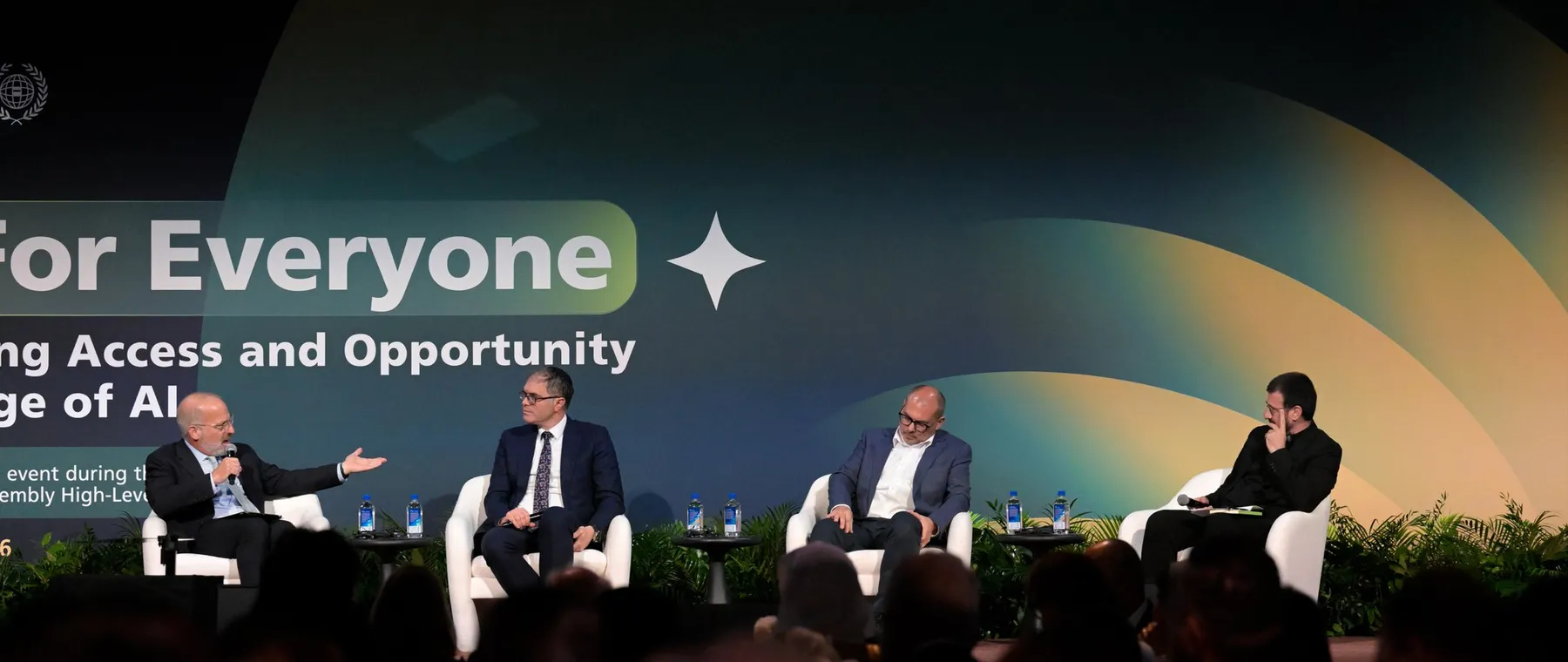
Muslim World League imagery accompanying its religious participation sessions on AI ethics. · Image: Muslim World League
During the high-level week of the 81st United Nations General Assembly, the Muslim World League organised religious participation sessions within its AI for Everyone event in New York. The League said the discussions aimed to develop shared religious perspectives on AI ethics while presenting an Islamic contribution to the debate.
Religions are entering a technological ethics debate
Artificial intelligence raises questions about fairness, responsibility, privacy, truth, employment, manipulation and the treatment of human beings by automated systems. These are technical problems, but they are also moral problems because design choices affect who benefits, who is harmed and which values are embedded in systems.
Religious traditions therefore have legitimate reasons to participate, especially where they possess developed ethical vocabularies about justice, human dignity and responsibility. Their contribution should be evaluated by the quality of the arguments rather than accepted merely because a tradition is old or widely followed.
The MWL is making both universal and Islamic claims
The organisation described an effort to identify common religious values while also calling for an Islamic perspective to be reflected in AI content. Those are related but distinct projects. Shared ethical principles seek overlap across traditions, whereas an explicitly Islamic framework begins from particular theological and legal sources.
TBR would separate the demographic fact that Islam has a very large global following from the philosophical question of whether a proposed ethical rule is justified. Popularity can establish social importance, but moral authority still requires reasons that can be examined.
AI systems can reproduce religious bias
Large models are trained on human-produced material containing stereotypes, hostility and inaccurate descriptions of religious communities. This creates a practical case for involving knowledgeable communities in testing systems for obvious errors and discriminatory patterns.
However, protecting people from bias is not the same as protecting religious claims from criticism. A well-designed system should distinguish between unfair treatment of believers and evidence-based examination of doctrines, institutions and historical claims.
Shared values may be easier to name than to apply
Many religions can endorse broad principles such as dignity, justice, honesty and compassion. Hard cases arise when participants disagree about what those principles require in areas such as sexuality, speech, blasphemy, gender, religious conversion or state authority.
An AI ethics framework built on religious dialogue will therefore need rules for handling disagreement, not merely a list of agreeable words. Universal standards become meaningful when they protect people whose beliefs differ from the majority.
Religious input should remain one voice among several
AI affects believers and non-believers alike. Ethical governance therefore needs religious perspectives, secular moral philosophy, law, human rights, technical expertise and the experiences of affected communities rather than granting any one source exclusive authority.
The MWL initiative is useful insofar as it widens the conversation and makes assumptions visible. Its proposals, like secular proposals, should remain open to criticism, evidence and revision as real-world consequences become clearer.
There is also a governance question about representation. No single religious organisation can speak for every Muslim, Christian, Jew, Hindu, Buddhist or non-believer. Global AI ethics should therefore distinguish consultation with influential institutions from consent by entire populations, and should make room for internal disagreement within traditions.
Evidence notes
The principal source is the Muslim World League’s 26 September 2026 account of the AI for Everyone religious participation sessions. TBR’s Qur’an and Islamic-law sources provide primary context for Islamic moral reasoning, while its evidence framework applies to claims about AI effects.
Ethical questions
How should AI systems distinguish respect for religious people from pressure to reproduce religious doctrine? What happens when proposed religious values conflict with freedom of expression, equality or the rights of people who reject those beliefs?
Conclusion
The MWL initiative shows that AI ethics is becoming a genuinely plural moral debate. Religious traditions can contribute important reasoning, but their proposals should compete on the same basis as others: clarity, evidence, consistency and consequences for human beings.
Sources used
- Evidence — Academic / peer reviewed
- Qur'an 6:151–153 — Primary source
- Religious Participation in AI for Everyone — Muslim World League — Primary source
- The Higher Objectives of Islamic Law — Primary source