
Articles · Case study
Plum Village Highlights Research on Thich Nhat Hanh’s Engaged Buddhism
New research asks whether inner transformation can support sustained action on environmental and social crises.
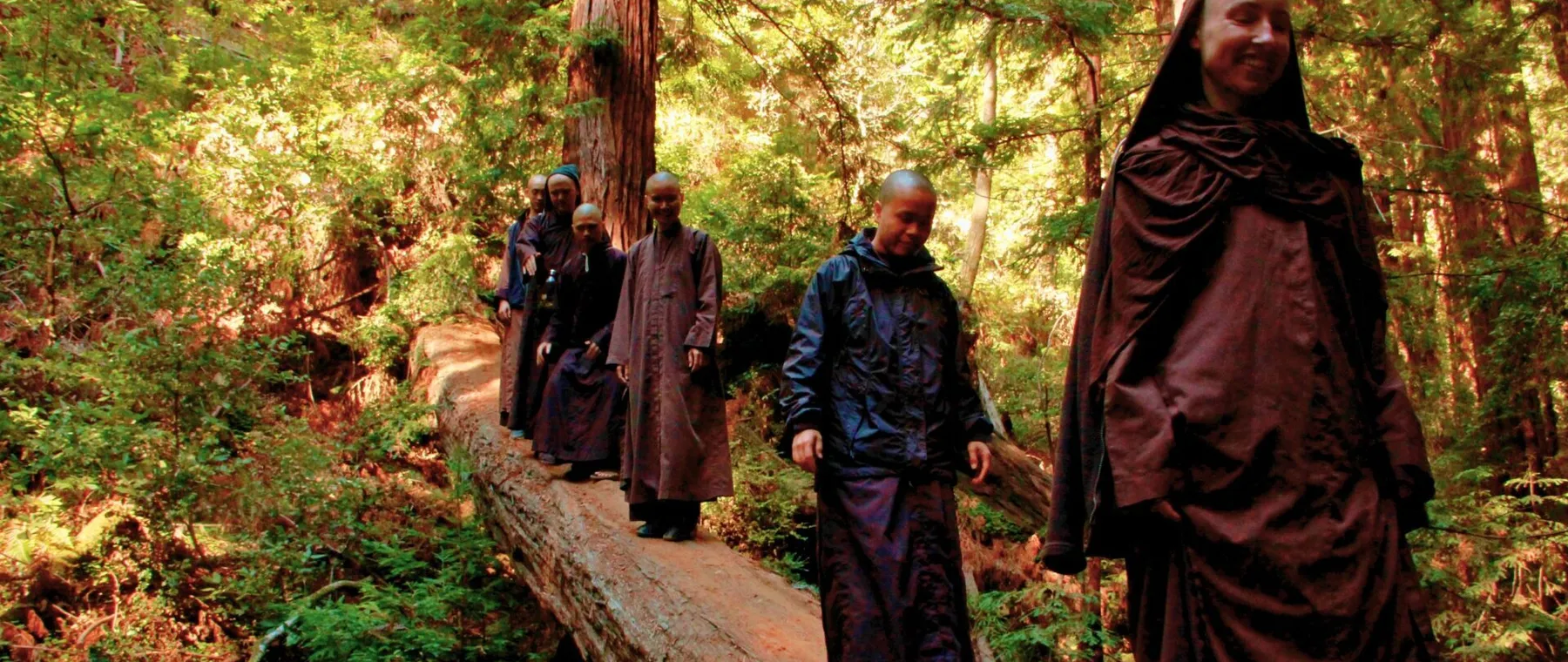
Plum Village imagery accompanying its report on research into the Zen and the Art of Saving the Planet course. · Image: Plum Village
Plum Village has highlighted a peer-reviewed study examining people who took part in its Zen and the Art of Saving the Planet course, based on teachings associated with Thich Nhat Hanh. The report presents participant findings on climate anxiety, resilience, connection, hope, agency and engagement, placing them within the wider idea of engaged Buddhism.
Engaged Buddhism links inner and outer change
Thich Nhat Hanh repeatedly argued that meditation should not become a retreat from the problems of the world. In the Plum Village account, mindfulness is presented as a way of seeing more clearly and then acting with greater awareness, rather than as a technique for private calm alone.
This matters because modern mindfulness is often marketed primarily as stress reduction. Engaged Buddhism makes a broader claim: that changes in attention, identity and emotional regulation may influence how people respond to social and environmental problems beyond the meditation hall.
The research gives the claim something measurable
Plum Village reports that the study surveyed participants in the Zen and the Art of Saving the Planet course and found substantial proportions describing reduced climate anxiety, greater resilience and increased feelings of connection, hope and empowerment. Those figures are potentially important because they move discussion from inspirational language toward outcomes that can be studied.
At the same time, self-reported change has limitations. People who choose a Buddhist-inspired course may already be sympathetic to its worldview, and participants who feel transformed may be more motivated to respond. A useful next step would be independent replication with comparison groups and longer-term follow-up.
Interbeing is being treated as a practical framework
The study, as described by Plum Village, focuses on shifts in how participants understand identity, relationship and suffering. Concepts such as interbeing encourage people to see themselves as embedded in ecological and social systems rather than as isolated individuals whose choices affect nobody else.
That framing can support responsibility, but it also deserves careful analysis. A worldview may be psychologically helpful without every metaphysical interpretation being literally true, so TBR separates the practical effects of a belief from the truth status of broader philosophical claims attached to it.
Research can challenge both believers and sceptics
For supporters of Plum Village, empirical research creates an opportunity to test whether claimed benefits are visible beyond personal testimony. If effects are robust, reproducible and durable, confidence in the practical value of specific practices can increase even among people who do not share Buddhist religious commitments.
For sceptics, the same openness creates a responsibility to engage with evidence rather than dismissing spiritual practice by category. A secular or non-Buddhist observer can accept that a practice improves coping or prosocial behaviour without accepting every doctrinal explanation offered for why it works.
The strongest case will come from cumulative evidence
One study should not be treated as the final word, particularly when outcomes are complex and partly self-reported. The value of this research lies in turning an important claim into something that can be investigated, criticised and replicated by others.
That is a productive meeting point between contemplative traditions and evidence-based inquiry. Buddhist practice can remain rooted in its own ethical and philosophical tradition while particular claims about resilience, behaviour and wellbeing are tested using methods that allow both confirmation and correction.
Evidence notes
The event source is Plum Village’s 18 September 2026 article describing the peer-reviewed study and participant findings. TBR’s Scientific Method and Evidence sources are relevant when assessing self-reported outcomes, selection effects and the need for replication.
Ethical questions
Should religious communities actively invite independent research into the practical effects of their teachings? How should researchers avoid reducing a rich spiritual tradition to only the outcomes that are easiest to measure?
Conclusion
The Plum Village research is significant because it places claims about engaged Buddhism into a form that can be investigated. Its most valuable contribution may be less the positive headline findings than the invitation to test how inner practice and social action relate over time.
Sources used
- Evidence — Academic / peer reviewed
- New Research on the Transformative Power of Thich Nhat Hanh’s Teachings — Primary source
- Scientific Method — Academic / peer reviewed