
Quote Verification
Quote Verification
Investigating whether sayings attributed to religious teachers, philosophers, scientists, writers and public figures are authentic, misquoted, paraphrased, unsupported or fabricated.
Each investigation separates two questions: whether the person actually said or wrote the words, and whether the words accurately represent that person's documented views.
The rule
A familiar saying is not evidence of authorship.
TBR separates the wording of a quotation from its attribution. Primary texts, authoritative editions and identifiable translations are preferred over quote websites, memes and unsourced compilations.
Browse verified voices
People in the quotation archive
Select a name to see the quotations currently associated with that person.
The Buddha
11 verified quotes
View quotations →
Aristotle
10 verified quotes
View quotations →
Epictetus
10 verified quotes
View quotations →
Marcus Aurelius
10 verified quotes
View quotations →
Marcus Tullius Cicero
5 verified quotes
View quotations →
Plato
5 verified quotes
View quotations →
Socrates
5 verified quotes
View quotations →
Quotation library
Search the evidence
“Man is by nature a political animal.”
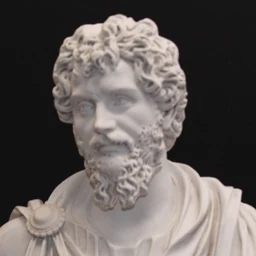
Aristotle
H. Rackham translation, Perseus Digital Library
“The good life then is the chief aim of society, both collectively for all its members and individually.”
Aristotle
H. Rackham translation, Perseus Digital Library
“All men naturally desire knowledge.”
Aristotle
Hugh Tredennick translation, Perseus Digital Library
“It is through wonder that men now begin and originally began to philosophize.”
Aristotle
Hugh Tredennick translation, Perseus Digital Library
“Virtue then is a settled disposition of the mind determining the choice of actions and emotions.”
Aristotle
H. Rackham translation, Perseus Digital Library
“An expert in any art avoids excess and deficiency, and seeks and adopts the mean—the mean that is not of the thing but relative to us.”
Aristotle
H. Rackham translation, Perseus Digital Library
“Similarly we become just by doing just acts, temperate by doing temperate acts, brave by doing brave acts.”
Aristotle
H. Rackham translation, Perseus Digital Library
“Men become builders by building houses, harpers by playing on the harp.”
Aristotle
H. Rackham translation, Perseus Digital Library
“Nature gives us the capacity to receive them, and this capacity is brought to maturity by habit.”
Aristotle
H. Rackham translation, Perseus Digital Library
“Moral or ethical virtue is the product of habit.”
Aristotle
H. Rackham translation, Perseus Digital Library
Verification method
What TBR checks before calling a quotation verified
Find the source
Locate the primary text, speech, recording, canonical text or authoritative scholarly edition.
Check the wording
Identify the exact passage and record the translator or edition when the words originated in another language.
Check the attribution
Separate authorship, reported speech and traditional or canonical attribution from later paraphrase or invention.
Continue researching
Move from a quotation to the evidence around it
A quote should be an entry point into a person's ideas, source texts and the wider evidence—not an isolated slogan.
ThinkersExplore philosophers, religious figures and influential minds.
SourcesTrace claims to texts, documents and source records.
GuidesRead durable explanations and foundational TBR conclusions.
FindingsSee evidence-led conclusions reached elsewhere on TBR.
ArticlesFollow current analysis, investigations and developing ideas.
Belief SystemsPut religious quotations into the tradition that preserved them.