Articles

Articles

Long-form investigations, essays, scripture analysis, ethics, science, philosophy, politics, animals, environment, and moral reasoning.

Latest

Latest articles

Ideas examined through reason, evidence, ethics and consequences, with source provenance shown where relevant.

All Philosophy & Reason Religion & Belief Ethics Science & Evidence Psychology Society

What Does It Mean to Question a Claim?

A starting point for reasoned inquiry

Questioning a claim does not mean rejecting it automatically. It means asking what is being said, what evidence supports it, how it is being reasoned, and what consequences follow if it is accepted.
Why Evidence Matters More Than Authority

Many people accept claims because they come from a priest, scripture, politician, expert, parent, institution, tradition or majority. Authority can sometimes be …

Why Strong Belief Is Not the Same as Truth

A belief can feel certain, sacred, obvious or emotionally powerful and still be mistaken. Truth requires more than the strength of conviction.

Why Avoidable Suffering Matters

If a being can suffer, then what happens to that being matters. This does not solve every moral question, but it gives suffering serious ethical weight.

What Is Good and Evil?

Good and evil are often treated as obvious, supernatural, religious or absolute. A reasoned approach asks what these words mean, how they are used, and what evidence or …

What Are Gods?

The word gods can refer to creator beings, personal deities, spirits, symbols, cosmic principles, tribal protectors, moral authorities or imagined beings. Before judging claims about gods, it is …

What Does Origins Mean?

Origins questions ask where life, the universe, humans, morality, consciousness and belief systems come from. These questions are important, but they must be separated carefully because not all …

What Is Life After Death?

Life after death is one of the deepest human questions. It is connected to grief, fear, justice, identity, religion and hope. A reasoned approach must treat the subject …

What Is Truth?

Truth is not whatever we strongly believe, whatever most people agree with, or whatever produces the result we want. At its simplest, truth concerns whether a claim gets …

What Is Evidence?

Evidence is information that changes how reasonable a claim is. Its strength depends on relevance, reliability, independence, corroboration and alternatives.

What Is Reason?

Reason is our capacity to move from information to conclusions, compare explanations, identify contradictions and decide what follows from what. Good reasoning does more than defend what we …

What Is Morality?

Morality concerns judgments about right and wrong, harm and benefit, duties, rights, fairness and character. Human societies have always developed moral rules, yet the existence of those rules …

What Is Consciousness?

Consciousness raises questions about awareness, selfhood, animals, suffering, death and moral consideration.

What Is Suffering?

Suffering includes pain, fear, distress, deprivation, grief and other negative experiences that matter to the one who undergoes them.

Do Gods Exist?

The question of gods cannot be answered properly until the claim is made clear.

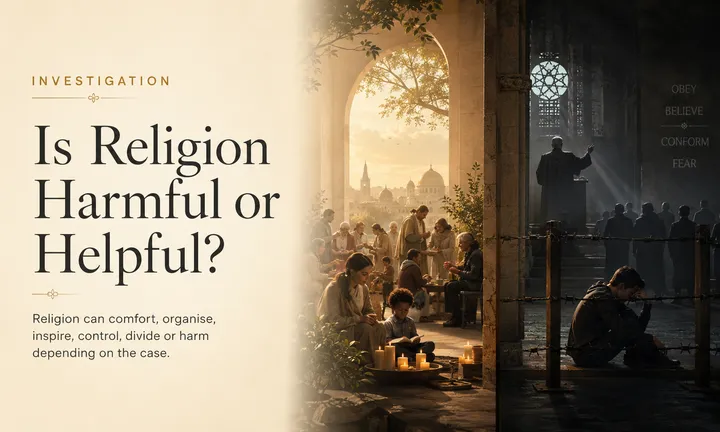
Is Religion Harmful or Helpful

Is Religion Harmful or Helpful?

A serious judgement of religion must look at both benefits and harms without slogans.

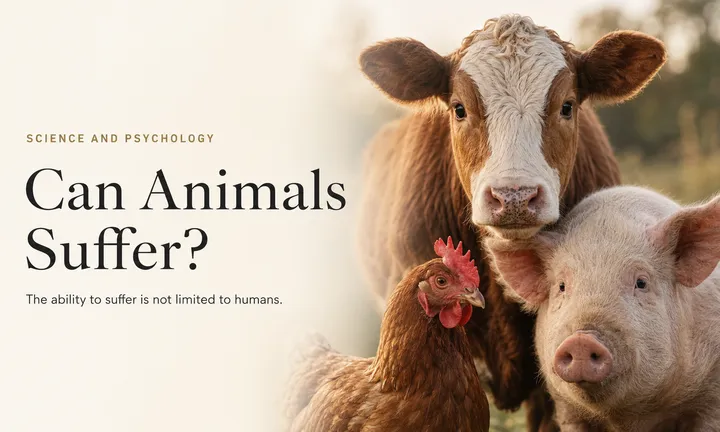
Can Animals Suffer? The ability to suffer is not limited to humans.

Can Animals Suffer?

Animal suffering matters because many animals show strong evidence of conscious experience, pain, fear and distress.

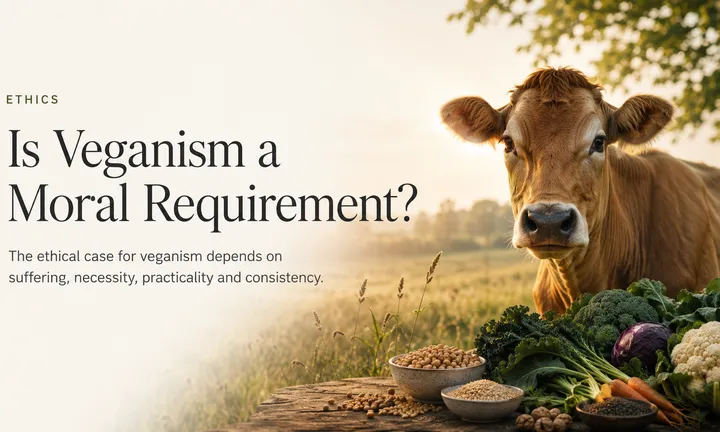
Is Veganism a Moral Requirement

Is Veganism a Moral Requirement?

Veganism raises serious moral questions about animals, harm, convenience, culture and responsibility.

How Can We Tell Whether a Claim Is True?

Claims confront us every day. Some are ordinary, some political, some religious, some scientific and some extraordinary. A responsible search for truth requires more than deciding whether a …

The Difference Between Evidence and Assertion

An assertion tells us what someone claims. Evidence gives us a reason to believe that the claim corresponds with reality. Confusing the two allows unsupported ideas to acquire …

Why Popular Beliefs Are Not Necessarily True

Large numbers of people can share the same mistaken belief. Popularity may tell us something about culture, authority or human psychology, but it does not by itself tell …

How Can We Tell Whether a Religious Claim Is True?

Religious claims concern some of the most important questions humans ask. Their importance does not exempt them from investigation. The same commitment to fairness requires neither automatic belief …

Why Do Intelligent People Believe Irrational Things?

Intelligence does not make a person immune to bias, identity, fear or social pressure. Highly capable people may use their abilities to investigate a belief—or to construct more …

When Does Obedience Become Complicity?

Institutions depend upon obedience, but obedience is not always morally neutral. A person may become complicit when their cooperation knowingly enables wrongful or avoidable harm.

Why Do We Love Some Animals and Eat Others?

Many people care deeply for animals while also participating in practices that harm other animals. The difference is often determined less by the animals themselves than by cultural …

Why Do People Believe They Have Seen Ghosts?

People throughout history have reported seeing apparitions, sensing invisible presences and encountering the dead. These experiences can feel completely real, but the experience and its proposed supernatural explanation …

Can Psychic Powers Be Tested Fairly?

Claims of telepathy, clairvoyance, precognition and mediumship can be investigated. A fair test must protect both the claimant and the investigation from hidden cues, selective reporting and explanations …

Why Coincidences Can Feel Meaningful

A coincidence can feel as though events were deliberately arranged for us. The feeling may be profound, but meaningful experience does not necessarily demonstrate an external force connecting …

Do Near-Death Experiences Prove Consciousness Survives Death?

Near-death experiences can be vivid, structured and life-changing. They deserve serious investigation. The central question is whether they demonstrate consciousness outside the brain or experiences produced during a …

How Cold Reading Creates the Appearance of Psychic Knowledge

A reader does not always need secret supernatural information to appear remarkably accurate. Cold reading combines broadly applicable statements, careful observation and information supplied unintentionally by the person …

Why Predictions Seem Accurate After the Event

Predictions often appear clearer and more accurate after an event has occurred. Hindsight, selective quotation and flexible interpretation can transform an uncertain statement into an apparently precise forecast.

Can Meditation Reveal Truth About the External World?

Meditation can alter attention, emotion, bodily awareness and the sense of self. These experiences may provide valuable knowledge about consciousness, but claims about gods, cosmic unity or external …

Does Consciousness Require a Brain?

Brain injury, anaesthesia, sleep, drugs and neurological disease can alter or remove conscious experience. This provides strong evidence that human consciousness depends upon the brain, although the ultimate …

What Evidence Would Demonstrate Life After Death?

Life after death is possible as a concept, but possibility is not evidence. To demonstrate survival, evidence must show that personal consciousness continues after irreversible bodily death and …

Do Humans Own Nature or Merely Control It?

Humans divide land, water and natural resources into property, territories and jurisdictions. These systems determine who may use or exclude others from a place, but they do not …

What Does Responsible Land Management Actually Mean?

Responsible land management is often used as a reassuring phrase. Its meaning should be judged through measurable outcomes: whether soil, water, habitats, animals and communities are protected while …

Is Development Justified Whenever It Creates Jobs?

Developments are often defended by the number of jobs they promise. Employment matters, but job creation alone cannot determine whether a project is beneficial, necessary or ethically justified.

Who Should Pay for Environmental Damage?

Environmental damage is often paid for by taxpayers, local communities, future generations and animals rather than by those who caused it. The polluter-pays principle attempts to place those …

Can Conservation Harm the Animals It Claims to Protect?

Conservation aims to protect species, habitats and ecological processes. Yet some conservation actions capture, confine, relocate, poison or kill individual animals. A good objective does not make every …

Should Nature Have Legal Rights?

Some legal systems recognise rivers, forests and ecosystems as holders of rights. The idea challenges the assumption that nature matters legally only when human property, health or economic …

Is Rewilding Always Beneficial?

Rewilding seeks to restore ecological processes and allow nature greater freedom to recover. It can rebuild habitats and biodiversity, but it is not automatically beneficial in every landscape …

When Does Wildlife Management Become Wildlife Destruction?

Wildlife management may protect habitats, reduce conflict or prevent suffering. It becomes destructive when killing and removal replace clear objectives, reliable evidence and serious efforts to address human …

Are Individual Animals Less Important Than Species Conservation?

Conservation often prioritises populations and species, while animal ethics focuses on individual experience. Conflict arises when protecting biodiversity requires harm to animals who are themselves capable of suffering.

Is Unlimited Economic Growth Possible on a Finite Planet?

Modern economies are commonly organised around continuing growth. Growth can improve living standards and support public services, but endless material expansion conflicts with finite resources, ecological limits and …

Should Companies Be Responsible for Harm They Legally Cause?

A company may comply with existing law and still cause serious environmental, social or health damage. Laws can be incomplete, outdated, poorly enforced or influenced by the industries …

Does Wealth Reflect Merit?

Wealth is often treated as evidence of intelligence, discipline or social contribution. These qualities may influence financial outcomes, but wealth is also shaped by inherited advantages, ownership, institutions, …

When Does Economic Inequality Become Unjust?

People differ in their work, preferences, responsibilities and circumstances, so complete equality of income is unlikely. The ethical question is when economic differences become unfairly produced or socially …

Is Exploitation Acceptable When Workers Agree to It?

Employment normally involves agreement between worker and employer. Yet workers may accept dangerous, degrading or poorly paid work because refusing would mean hunger, homelessness, debt or loss of …

Should Essential Services Be Operated for Profit?

Water, electricity, healthcare, housing, transport and communication can be essential to modern life. Private providers may deliver them effectively, but profit creates risks where customers cannot realistically refuse …

Who Pays the Real Price of Cheap Products?

A cheap product appears to save money for the buyer. Its full cost may instead be paid through low wages, unsafe work, pollution, animal suffering, public subsidies and …

Can Ethical Consumerism Change an Unethical System?

Consumers are often encouraged to change society through what they buy. Purchasing decisions can support improved practices, but individuals face limited information, unequal incomes and markets designed by …

Is Poverty a Personal Failure or a Structural Outcome?

Poverty is sometimes described as the result of laziness or poor decisions. Personal choices can affect outcomes, but those choices occur within economic and social structures that distribute …

Should Future Environmental Costs Be Included in Today's Prices?

Many products appear inexpensive because pollution, climate damage, resource depletion and future cleanup are excluded from their price. Including these costs could improve decisions, but it also raises …

How Social Pressure Shapes What We Believe

People rarely form beliefs in complete isolation. Family, friends, institutions, communities and wider culture influence which ideas feel normal, respectable or dangerous.

Why Intelligent People Believe Irrational Things

Intelligence does not guarantee rationality. Highly capable people can hold unsupported beliefs because reasoning is influenced by identity, emotion, loyalty, incentives and prior commitment.

The Difference Between Expertise and Authority

Experts and authorities may overlap, but they are not the same. A person can hold power without relevant knowledge, while a genuine expert may possess knowledge without institutional …

When Should We Distrust the Consensus?

Consensus can reflect accumulated evidence and scrutiny, but it can also reflect conformity, institutional pressure or shared error. The important question is how the agreement was produced.

Why Conspiracy Theories Can Feel More Convincing Than Evidence

Conspiracy theories often offer simple explanations for confusing events. They can feel convincing because they organise uncertainty into a story involving hidden causes, deliberate plans and identifiable enemies.

Can Free Speech Survive Without Responsibility?

Free speech protects dissent, criticism and inquiry. Yet speech can also deceive, intimidate, defame or incite harm. A durable freedom of expression requires both protection and responsibility.

Why Outrage Spreads Faster Than Correction

False or misleading claims can spread rapidly when they provoke anger, fear or moral disgust. Corrections usually arrive later and rarely generate the same emotional response.

Does Social Media Help Us Find Truth or Reward Certainty?

Social media allows evidence, testimony and expertise to circulate rapidly. The same systems also reward simple certainty, emotional conflict and claims designed to attract attention.

Are We Becoming Better Informed or Merely More Opinionated?

People now encounter more news, commentary and data than previous generations. Yet exposure to information does not necessarily mean that beliefs are more accurate or better reasoned.

Can War Ever Be Morally Justified?

War deliberately exposes human beings to death, injury, displacement and trauma. Any claim that war is morally justified therefore requires an exceptionally strong case.

Who Is Responsible for Civilian Deaths in War?

Civilian deaths are often described as accidental or unavoidable. Yet responsibility in war may extend beyond the individual who directly caused the death to commanders, governments and those …

Why Governments Use Euphemisms to Describe Violence

Governments rarely describe violence in its most direct terms. Words such as neutralisation, collateral damage and enhanced interrogation can reduce emotional resistance and obscure who was harmed.

Are Economic Sanctions Ethical?

Economic sanctions are often presented as a peaceful response to aggression or repression. Their morality depends upon who is harmed, whether the objective is achievable and whether less …

Does Deterrence Prevent War or Prepare for It?

Deterrence rests upon convincing an opponent that aggression will produce unacceptable consequences. It may preserve peace, but it also depends upon maintaining the credible capacity and willingness to …

Why War Crimes Are Prosecuted Unequally

War crimes are prohibited regardless of who commits them. In practice, however, some suspects face investigation and trial while others remain protected by powerful states.

The Moral Difference Between Terrorism and State Violence

Terrorism is commonly condemned while violence by states is often described as security, defence or military action. The labels differ, but moral judgement requires more than asking who …

Do Powerful Countries Apply International Law Selectively?

International law claims universal application, yet enforcement depends heavily upon political power. Powerful countries may promote rules in one conflict and resist them in another.

What Would a Consistent Opposition to War Look Like?

Many people oppose wars conducted by enemies while excusing similar conduct by allies. A consistent opposition to war must judge actions by the same moral standards regardless of …

How Democracies Gradually Become Authoritarian

Democracies do not always collapse through military coups. Elected governments can gradually weaken courts, journalism, opposition parties, elections and public institutions while continuing to claim democratic legitimacy.

What Is the Difference Between Authority and Authoritarianism?

Every organised society uses authority. Authoritarianism is not simply the existence of rules or leadership, but a system in which power is concentrated, weakly accountable and protected from …

Why Do Ordinary People Support Dictators?

Dictators do not rule through force alone. Some citizens actively support them, while others cooperate, remain silent or accept repression because they believe the alternative would be worse.

How Governments Manufacture Public Consent

Governments do not need to force every citizen to agree. They can shape public opinion by controlling agendas, defining threats, selecting experts and presenting preferred policies as necessary …

Why Authoritarian Governments Fear Independent Journalism

Authoritarian governments seek to control not only actions but also public understanding. Independent journalists can reveal corruption, repression, incompetence and contradictions that official media conceal.

How Propaganda Works Without Telling Direct Lies

Propaganda does not always invent facts. It can mislead by selecting only favourable information, removing context, repeating emotionally useful details and ignoring evidence that would change the audience's …

Can Elections Exist Without Genuine Democracy?

Elections are an important part of democracy, but ballots alone do not guarantee democratic government. Authoritarian systems may hold regular elections while ensuring that those in power face …

When Does Patriotism Become Blind Loyalty?

Patriotism can express care for a community, its people and shared institutions. It becomes blind loyalty when criticism is treated as betrayal and national identity is used to …

Is Human Convenience Enough to Justify Animal Suffering?

Humans use animals for food, clothing, entertainment, research and convenience. The ethical question is whether avoiding expense, effort or habit change can justify pain, fear, confinement and death …

Can Humane Slaughter Really Be Humane?

The term humane slaughter suggests that animals can be killed with minimal fear and pain. Improved handling and effective stunning can reduce suffering, but the ethical question also …

Do Animals Have Rights, Interests or Both?

Debates about animals often divide between welfare, which considers interests, and rights, which places limits upon how individuals may be used. The two approaches overlap but are not …

The Moral Difference Between Necessity and Preference

The same harm may be judged differently depending upon whether it was necessary or merely preferred. Ethical reasoning therefore requires honest examination of what people genuinely need and …

Is Hunting Ethical When Food Is Readily Available?

Hunting has provided food and materials throughout human history. Where people have reliable access to other food, the ethical case depends less upon survival and more upon suffering, …

Does Tradition Justify Harm to Animals?

Animal use is often defended through tradition, identity and heritage. Traditions can strengthen communities, but they must still be evaluated according to the suffering they cause and the …

Are Zoos Conservation Centres or Places of Captivity?

Zoos commonly describe themselves as centres for conservation, education and research. Their ethical status depends upon actual welfare, conservation outcomes, breeding decisions and whether captivity benefits the animals …

Should Wild Animals Be Protected From Human Entertainment?

Wild animals are used in performances, tourism, photography, hunting, racing and public spectacle. The ethical question is whether amusement and excitement are sufficient reasons to disturb or control …

Is Something Moral Because a God Commands It?

Some religious traditions hold that moral duties come from divine commands. The central philosophical question is whether an action becomes good because a god commands it, or whether …

Does Intention Matter More Than Consequence?

Moral judgement often considers both what a person intended and what happened. Good intentions can lead to serious harm, while beneficial outcomes can arise from selfish or reckless …

Is It Ever Right to Harm One Person to Save Many?

Moral dilemmas sometimes ask whether one person may be harmed to save a larger number. The answer depends upon necessity, consent, responsibility, uncertainty and whether the person is …

Are Human Lives Morally More Valuable Than Animal Lives?

Most societies give human lives greater moral weight than animal lives. The ethical question is whether this priority rests upon relevant differences or merely upon loyalty to our …

What Do We Owe Future Generations?

Actions taken today shape climate, biodiversity, public debt, technology, institutions and resources available to people not yet born. Future generations cannot vote, negotiate or protect their own interests.

Is Doing Nothing a Moral Decision?

People often distinguish harmful action from doing nothing. Yet choosing not to intervene can still affect what happens, especially where a person has knowledge, power or responsibility.

Can a Legal Action Still Be Morally Wrong?

Legal systems permit many actions that may still be exploitative, deceptive, cruel or socially damaging. Law and morality overlap, but neither can be reduced entirely to the other.

Is Profit a Sufficient Defence for Harm?

Businesses must remain financially viable, and profit can reward risk, investment and useful production. The ethical problem arises when profitability is presented as a complete defence for suffering …

What Does It Mean for Something to Be True?

People use the word true in different ways. A statement may be sincerely believed, socially accepted or practically useful without accurately describing reality. Understanding truth requires separating what …

Absolute Truth, Probable Truth and Practical Truth

Truth is sometimes divided into absolute, probable and practical forms. These terms can be useful, but only if they do not confuse what is actually true with how …

How Much Evidence Should a Claim Require?

Not every claim needs the same amount of evidence. Everyday low-risk claims may reasonably be accepted provisionally, while extraordinary, consequential or highly specific claims require stronger and more …

Why Extraordinary Claims Need Stronger Evidence

An extraordinary claim is not merely unusual or unpopular. It is a claim that would require major revision of well-supported knowledge or depends upon causes outside reliably observed …

Can Eyewitness Testimony Be Trusted?

Eyewitness testimony can provide valuable evidence, but confidence and honesty do not guarantee accuracy. What a person noticed, remembered and later reported can be altered at several stages.

How Memory Creates Events That Never Happened

People can remember events that did not happen or remember real events with important details changed. False memories do not necessarily involve dishonesty; they can arise through ordinary …

Why Personal Experience Is Powerful but Unreliable

Personal experience often carries greater emotional force than statistics or distant testimony. It can reveal genuine events, but it is limited by the observer's perspective and vulnerability to …

What Is Confirmation Bias, and How Does It Mislead Us?

Confirmation bias is the tendency to favour information that supports what we already believe and to overlook, reject or reinterpret conflicting evidence.

How to Change Your Mind Without Feeling Defeated

People often experience changing their mind as losing an argument, betraying a group or admitting weakness. A truth-seeking approach treats revision as evidence that learning has occurred.

Does the Age of a Belief Make It More Credible?

Ancient beliefs often command respect because generations have preserved them. However, long survival can result from tradition, authority, repetition and social identity as well as from reliable evidence.

Why Are People Usually Born Into the “Correct” Religion?

Most people encounter one religion first through parents and society. They may later regard that inherited religion as uniquely true, while people born elsewhere reach equally confident but …

Can Faith Be a Reliable Method of Finding Truth?

Faith can mean trust based upon evidence, confidence despite uncertainty or belief without sufficient evidence. Whether it reliably finds truth depends upon which meaning is intended and whether …

What Would Count as Evidence for a God?

The question is not whether any event can be described as evidence for a god, but whether the evidence is sufficiently specific, reliable and difficult to explain without …

Why Do Sincere Believers Reach Contradictory Conclusions?

Believers in different religions can be equally honest, intelligent and devoted while reaching incompatible conclusions. Understanding this requires separating sincerity from reliability.

Are Miracles Evidence, Coincidence or Misinterpretation?

A miracle is often understood as an event caused by supernatural or divine intervention. Before accepting that explanation, the event itself and the available alternatives must be examined …

Can a Sacred Text Prove Its Own Authority?

Sacred texts often present themselves, their teachings or their messengers as authoritative. The question is whether internal claims can establish authority without independent support.

Why Do Religions Change Their Teachings Over Time?

Religions often present enduring truths, yet their teachings, institutions and accepted practices change across generations. These changes may be described as reform, restoration, development or reinterpretation.

Is Religious Experience Evidence of an External Reality?

People report visions, sensed presences, unity, revelation and answered prayer across many religions. The experiences may be sincere and transformative while their causes remain uncertain.

Community Notes and misinformation — Truth By Reason editorial illustration

Do Community Notes Actually Stop Misinformation?

Community Notes are often praised as a scalable alternative to centralised fact-checking. New large-scale evidence from X suggests they can substantially reduce the spread of misleading posts once …

Animal sentience and glue traps — Truth By Reason editorial illustration

If Animals Are Sentient, Should Glue Traps Ever Be Used?

On 7 September 2026, the UK government responded to the Animal Sentience Committee’s call for a coordinated ban on the sale of rodent glue traps. England already restricts …

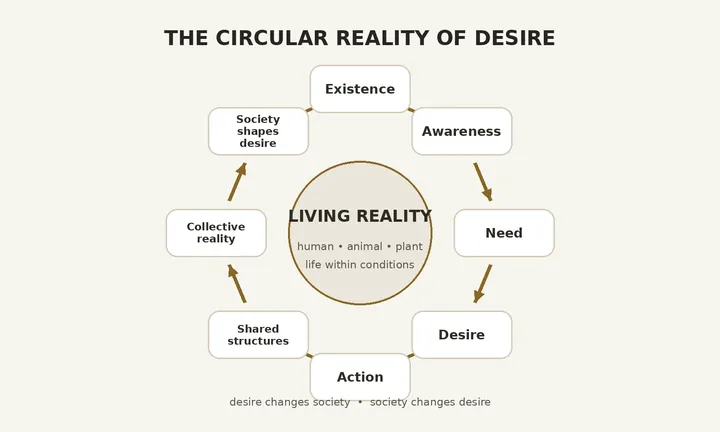
Collective Reality — The Circular Reality of Desire

Collective Reality: A Realm of Desire

From the moment life exists, it encounters conditions, needs and pressures. In conscious beings these can become desires, actions and eventually shared structures, creating a circular relationship in …

Guide to Philosophical Thinking

A Guide to Philosophical Thinking

Philosophy is a disciplined way of asking what we mean, what follows from what, what evidence matters, and whether a conclusion survives serious objections.

Guide to the World's Religions

A Guide to the World's Religions

Religions combine belief, practice, identity, ritual, community and moral life. Comparing them fairly requires attention to history, internal diversity and the different kinds of claims they make.

Guide to Human Rights

A Guide to Human Rights

Human rights language expresses the idea that certain interests and freedoms should not depend entirely on status, wealth, nationality, religion or the goodwill of those in power.

Guide to Society and Culture

A Guide to Society and Culture

People do not make choices in isolation. Families, institutions, laws, markets, technologies, traditions and social expectations all shape what seems normal, possible, admirable or forbidden.

Guide to Environment and Our Future

A Guide to Environment and Our Future

Environmental questions combine physical evidence with ethical and economic choices. Good reasoning separates what science can establish from the value judgments involved in deciding which risks, costs and …

How to Evaluate a Claim

How to Evaluate a Claim

Claims arrive wrapped in confidence, authority, emotion and repetition. A reliable method strips those away and asks what exactly is being claimed, what evidence supports it and what …

Evidence, Belief and Certainty

Evidence, Belief and Certainty

Belief is unavoidable; certainty is rare. Good reasoning asks not whether we can eliminate every doubt, but how strongly the available evidence should change our confidence.

Logical Fallacies: A Practical Guide

Logical Fallacies: A Practical Guide

Fallacies are recurring patterns of weak reasoning. Learning them is useful only if the label helps explain what went wrong, rather than replacing an argument with a vocabulary …

Reading Sacred Texts Critically

Reading Sacred Texts Critically

Sacred texts matter deeply to billions of people, but reading them responsibly requires more than extracting a sentence and treating it as self-explanatory.

Ethics Without Slogans

Ethics Without Slogans

Moral language becomes easy when reduced to slogans. Real ethical problems are harder because values can conflict, consequences are uncertain and rules that work in one case may …